It’s unsafe to get rid of a hive of bees on your own, because bees is extremely aggressive & intense. You might wind up needing to go to an emergency room due to this. You need to speak with the professionals in case you discover a nest close to the home. In order to enable you to discover the best bee removal service to suit your requirements, we will be sharing some suggestions in this article regarding Pro Bee Removal Services.
Having the hive taken out as quickly as possible is the most crucial thing. It might take a little while, however, to familiarize yourself with the different pest management services in your area. Don’t take any action and concentrate on locating a specialist who can assist you.
Much like hornets and wasps, bees aren’t harmful. Bees don’t have aggressive behavior, but are a crucial component of the environment. As honey bees are dying off, you need to stay away from killing them. In order to relocate the nest, the most effective strategy is to look for a good professional.
Prior to calling a pest management company, be certain you’re not dealing with bees. A bee may be recognized by the hairs all over its body. In case you’re certain that you’ve bees, you need to speak with a reputable bee removal company. Not all pest management businesses possess the equipment to get rid of a hive of bees and move them.
Search for bee removal services on the internet and you are able to typically locate them by utilizing the Internet. Look at reviews authored by clients and do not hesitate to call the greater Business Bureau in case you want extra info. The very first thing you have to verify would be that the professional you’re employing has a great track record and it is legitimate.
Call a couple of different specialists to get their costs and compare them. Be sure you look at the rates of comparable prices. For instance, if you employ a specialist to come and examine the area around your house after the hive has been removed, it’s certainly well worth the cost to hire someone who’ll keep the bees out.
Select a specialist to deal with the hive promptly. Whenever you call a pest management company to obtain a price, you need to discover exactly how busy they’re, and in case they are able to send a person to eliminate the hive. Do not wait to pay much more so you are able to have somebody deal with the issue within a smaller time frame.
Call a Beekeeper in case you can not locate a pest management business in your town. They might wish to move the hive for their home and can have the equipment and understand just how to get it done. It is possible to search for beekeepers in your town on the web, and you need to have the ability to get their contact info.
In case you discover plenty of bees about your home, you need to act quickly in case you see any of them. In case you can not locate the place that the bees are coming from, look for a hive and after that call an expert to inspect it. When you perform some research and discover what hives are being taken out by various other beekeepers in your region, you are able to then employ them to remove the hive and relocate it as quickly as you can.
If You’re Only starting out In Beekeeping Here’s A great Guide To Beginning
The art of beekeeping is a long-standing tradition all over the globe and has been practiced for a long time. It’s among the world’s most cherished cultures and it is admired because of its delicate intricacies. There’re lots of people who do not take note of these nuances and just dismiss just about the most beautiful pastimes and traditions on the planet. In the following paragraphs we’ll be taking a look at a few of the fundamentals of beekeeping for people that are just getting started. It ought to help spell out much more on this particular subject for people that are still learning about what it takes.
It’s Important To Acquire Knowledge
If you have been doing this for a long time, you will want to talk to a beekeeper who has experience carrying this out. There’re lots of people who, because of health problems (e.g. not in the position to handle the sting), are not able to perform this tradition.
Understand the distinctions between the queen and the employees and the nuances of beekeeping. In the future, these details will prove useful.
Costs
For people who are keen on going down this route, there’re financial restrictions in place also. Individuals who are on a tight budget will need to take this into account as well before diving in head first.
The expenses related to this practice will include expenses related to protective gear, cultivating hives, extracting equipment, and safety for the bees. It could add up based on the amount of bees you will find.
Seasons
The beekeeper will be working 24/7 with respect to the year. There is no season where work does not take place.
The summertime is usually the most frantic with the bees working harder and quicker compared to the other months. At this time, it becomes essential to make sure that the hive has sufficient space to reproduce. It is able to truly help if you include frames for their hive.
Whenever fall as well as winter come about, bees are frequently killed as well as replaced by the beekeeper or maybe the queen is evaluated to see whether she is able to sustain another season. The beekeeper makes this choice with excellent care, and expertise.
Then comes springtime, as well as the bees are brought back to action, gradually but surely.
Necessary Equipment
What are you going to have to have for this task? Things like bee gloves, high top boots, veils, bee suits, along with top hats are important. These’re the fundamental items a beekeeper should have.
Additionally you need mining tools as well as specially created metal hives for them to operate in.
Bees are going to continue playing an important part in ensuring the balance of the ecosystem across the planet and are unlikely to leave it quickly. The world wouldn’t be the way it’s these days with no bees, and they’re among the most undervalued creatures on Earth. Beekeeping is among the disciplines which will continue to hold value and it is vital to ensuring these animals aren’t overlooked. You ought to have been able to comprehend exactly why the beekeeping tradition is so important and the reason it’s very valued by a lot of individuals, and why it’s very important with this beginner’s guidebook.
Beehive Removal Services – The reasons you Have To Employ a Professional
Dynamics is amazing as well as wonderful. There is a great deal out in nature it is able to really make one’s head spin. You can find adorable animals, gorgeous forests and powerful rivers. You will find great, gaping valleys and huge, awe inspiring mountains. There’s a component of nature that, wherever you go, just sits there waiting to astonish as well as thrill people.
There’s additionally a great deal of nature which is harmful to humans. There’re numerous adorable animals, but many are wild and treat people as prey. Rodents and pests may even infest a house or garden. Ants, termites, and roaches could easily wreck all sorts of destruction on home and house, causing damage that could well cost hundreds, or even thousands, of dollars to fix.
Bees tend to be among the most harmful insects available. Due to this, one nearly would like to leave the beehive by itself. Bees tend to be good for plants, all things considered. They help to cross pollinate, and that means dispersing gorgeous flowers nearly everywhere they go. They additionally embed their hives within existing structures, which could result in harm to the structure. Bees may even swarm as well as attack anybody who gets way too near their hive. This’s unsafe enough for anybody, though it gets a lot more risky in case the individual is sensitive to bees.
That’s exactly why it’s very crucial to have the proper beehive removal solutions. It might be tempting to go at a beehive putting on long sleeves and bringing a can of bug spray, but that may not take care of the issue. To get rid of the hive, it’s not sufficient to merely kill off a lot of bees. To be able to totally clear the hive, there’re specific steps that have to be carried out. A pro is going to know those steps, and have the equipment to do it. They will also get the proper safety equipment to make certain that nobody gets hurt during the process.
A swarm of furious bees can oftentimes end up when a beehive removal company shows up to begin taking out the beehives. Because somebody is ruining their house, that makes sense. Therefore even in case they were doing the work themselves, without the assistance of an expert, they might not be in a position to control the bees sufficiently to stop them from swarming into the community and attacking any individuals in the way. What begins as being a simple effort to get rid of pests could quickly turn into a funeral in case some nearby person was sensitive to bees.
That is why it is so crucial to get the job done by a specialized removalist. They are going to have the ability to get rid of the bees as safely as possible and they’ll get it done while not causing any harm to the home or garden. These’re things you would like whenever a beehive gets taken out, and it is issues a non-professional might not be able to. Therefore in case you want a beehive taken out, employ a specialized service. You will be happy you did.
Wasp Nest Removal – The reasons you Have to have a Professional
Nature could be both dreadful and amazing. You will find a great number of genuinely incredible things you can discover simply by setting foot outside your home. You can easily see a lot of gorgeous sights, such as lush forests and towering mountains. Additionally there are wild animals, though, of which a number of treat humans as prey animals.
Many of these animals tend to be, nevertheless, far from the human population. When someone takes a look at nature that is even closer to where we live, generally it has been perfected. Humans have developed all kinds of technology which will help them cope with the environment close to them. The main air which human beings have made helps protect individuals from the high temperature. Humans have developed numerous tools to guard themselves from the hazards nature is able to present to them.
Regrettably, sometimes there is just no protection. There’re nevertheless all kinds of various insects as well as vermin which manage to set up shop just next door to people. It is true that mice and rats aren’t unusual, but they’re not the only kinds. Termites and ants are simply a handful of insects that could result in damage to your house as well as your belongings. Then you will find wasps, that may be dangerous, as well as stinging bugs. Whenever a wasp nest develops, your first reaction is usually to eliminate it. A lot of people utilize poisons or water hoses to go after the wasps nest.
Although you can certainly accomplish that, a specialized wasp nest removal service is a lot more effective and safer. There’re a number of explanations for this. First of all, it is a matter of security. There’re definitely products out there that will eliminate wasps, though the quality of the poisons which are available in the civilian sector might not be enough. Pro pest removal services will have access to stronger harmful toxins along with other methods which will help keep them safe while they do the job that they have to do.
Not just that, they additionally have many years of experience dealing with pests. Although it might appear like all you need to do is squirt some poison on the nest, this isn’t so easy since the wasp nest might be greater than you realize. A wasp nest removal company can let you know whether or not more work must be done. They will have the ability to carry out the work safely, and rapidly, and nobody will need to be worried about the possibility of wasps swarming as well as causing a lot more trouble.
It might seem like employing expert pest elimination services will be a little on the costly side, which may be true. However the answer is to induce needless risk on yourself and all those around you, and you might not be able to completely cleanse the infestation. Therefore, if you’ve a wasp issue, be sure you employ a specialist.
Removal of a Beehive Without Killing
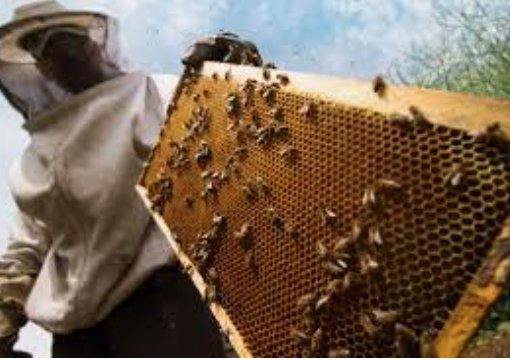
Would like to eliminate a beehive within your yard and want to do it easily? There’re occasions when this can be an issue which will occur. It’s usually vital that you discover what the best strategy will be to get started down this path. In order to get rid of the beehive correctly, we need to look at what we have to do. The very last thing you would like is for the hive to end up being ruined and for the bees being unsatisfied. These suggestions will help individuals that are in this situation at this time in time.
Look at the Beehive
In case you wish to remove a beehive with no killing, you need to initially look at the beehive. You have to locate it and make an appropriate evaluation of what the best plan of action will be. It’s not hard to get confused and/or to have hasty with respect to the strategy being taken.
Because the bees aren’t moving anyplace, this’s the time to prepare everything thoroughly. They will be there, and you can have a good assessment.
Get it right and you are going to enjoy the procedure rather than being forced to worry.
Your Objective Is Attracting A Metal Box
By enticed the bees into a new’ home’, the procedure will be accomplished with relative ease. A lot of individuals are usually disappointed because they are not sure what you should do as well as do not wish to kill the bees.
Obtaining a metal box is the best way to go in case you’re planning to get it done yourself, and the best way is to call a pro to assist you.
This can enable the bees to be brought in and then be moved to a different place.
In case You Need Beehive Removal Services
For getting rid of the beehive, probably the most crucial thing is to utilize bee removal services. They are going to be trained and they will understand what’s needed moving forward. They aren’t gon na waste time neither are they going to be ignorant of what’ll work.
They will be all set to go as well as the job’ ll be completed with great care. This’s what you will need ultimately.
These services are extremely valuable and will have a huge role to play, and so choose them.
In the long term, you’re going to discover the following suggestions will assist you with beehive removal with no killing. Those who are unwilling to pay attention are the people who’ll either wind up harming the bees and/or harming themselves.
These suggestions are the way to go and have been used for a long time due to how well they work. Do not force the issue, and be patient. Individuals who are patient are going to find the results they’re searching for. That’s the thing that matters most.
Just how Much will Beehive elimination Cost?
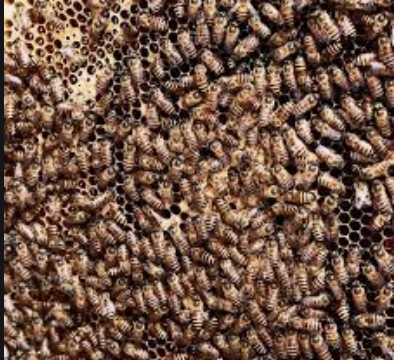
Costs for moving or destroying beehives differ based on the seriousness of the issue. When the bees haven’t been poisoned with pesticide sprays, a number of beekeepers will in fact perform the job free of charge. Or else, they are going to charge, since the bees have to be destroyed. Bees which possess been subjected to pesticides possess a low survival rate. There’s usually a fee for removalists and exterminators.
Just how Much will Swarm relocation Cost?
You could obtain a swarm of bees for much less than you will need to purchase a whole beehive, which means you are able to eliminate only a couple of swarms of bees from your own yard. Nearly all beekeepers and removalists can do this for around USD seventy five to USD 200. The actual size of your swarm along with the firm you employ will determine the rate.
In case the beehive is bad, then extermination might be the next step. Because honeybees are extremely advantageous to some ecosystem, this shouldn’t be the first step. For between $300 and $100, a pest management business is able to manage this.
Beehive Removal Cost: Relocating The Honey Bees’ Nest(s)
In case you wish relocating a whole nest, instead of simply eliminate a swarm, it would set you back as much as USD 700. Some can carry out this job for as low as USD 100. You are able to get quoted some number between, based on the seriousness of the issue and also the scope of the issue.
Just how Are Quotes Given
Before you get a selection to a beekeeper, it is better to take a look at the situation and figure out what the very best guess is for the price of eliminating a beehive. Without seeing the particular issue, it might be hard for him to comprehend how serious the issue is.
It’s Hard to Relocate
Although often cheaper, the majority of bees aren’t deemed good enough for this particular relocation. In case a person works with a beehive within a suburban lawn while gardening, it might wind up polluted with pesticides. Prior to calling a beekeeper, you need to be prepared to pay for the extermination.
There Is No Need To Call A Beekeeper If…
It’s totally natural to notice a few bees every once in awhile. Nearly all honeybees do not assault individuals unless they’re provoked. Additionally they are great for the planet. Whenever the population has become out of hand or even when they are terrorizing your kids, it is the best time to call a beekeeper.
It might take Several Weeks To Remove A Beehive
The entire process does not conclude in a day. As soon as the existing beehives are ruined or relocated, new beehives could develop. This’s the reason a lot of people think it is really costly to remove a beehive. Clearing the entire yard of them may mean paying for several visits from the beekeeper. Perhaps even beekeepers that eliminate hives at no cost might count on you to pay their traveling costs. So it might mean paying for a couple of airplane tickets.
Talking With a Beekeeper Might be a Good Idea
The majority of beekeepers are glad to get rid of the bees from their garden. Some require a charge. Many will more than expect you to more than pay for the train ticket it had taken to reach your home. It is usually well well worth the expense for some homeowners to get a beehive taken out. Particularly when somebody in the house is hypersensitive. Obviously, it is not fun to be stung by a bee in either case.